
The SDF-Damascus Deal and the Kurdish Question: Prospects for Peace

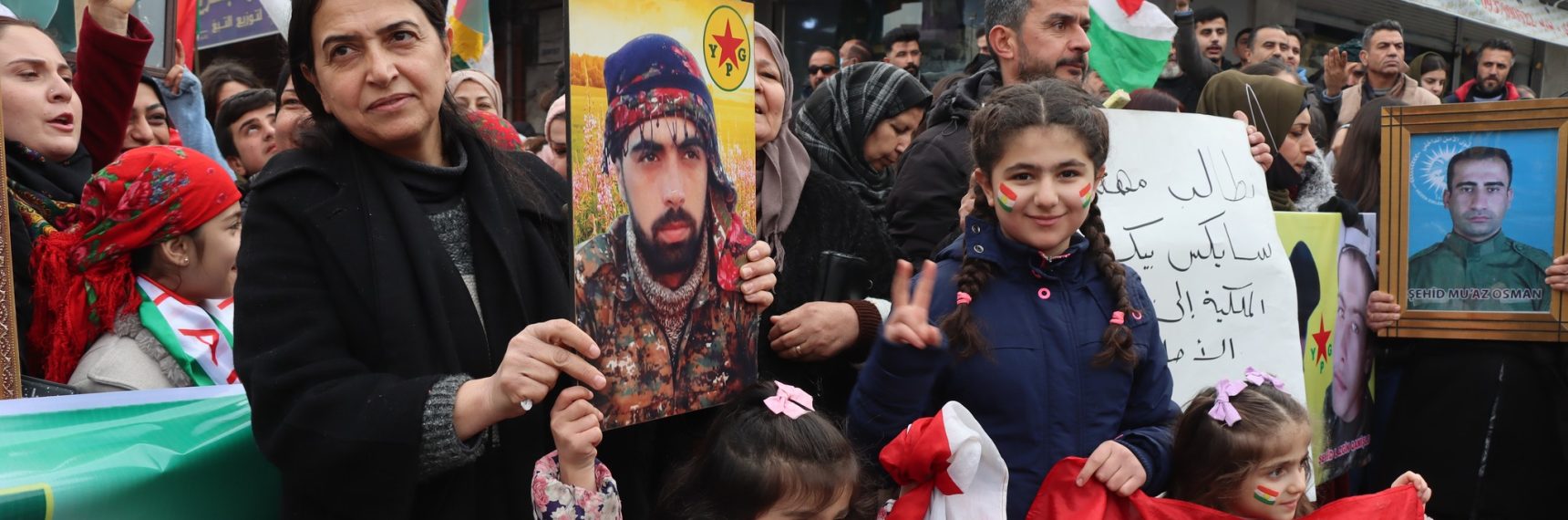
The January 30 integration deal between the Syrian Democratic Forces (SDF) and the Syrian Transitional Government has staved off ethnic cleansing in Syria’s Kurdish north and brought nearly a month of bloody conflict in the region to an end. At the same time, it leaves Syria’s ‘Kurdish question’ unresolved. The terms of the agreement fall short of full equality for Kurdish citizens and even shorter of Kurdish political aspirations cultivated over decades of underground struggle and fifteen years of de facto self-rule.
To prevent a return to destabilizing conflict in Syria and the region, the agreement should be understood not as an endpoint, but as terms on which a peaceful political struggle to resolve Syria’s Kurdish question can now be waged. Kurdish actors and guarantor powers can focus on four areas of opportunity created by the deal: geographic delineation, military and internal security, local governance, and Kurdish identity, language and culture. In each of these areas, the agreement text can and should be interpreted in a manner that addresses Kurdish concerns about physical safety and security, equal rights for Kurds as Kurds, and meaningful representation in new institutions.
The Agreement: A Middle Ground
The January 30th is not as favorable to the SDF and the Syrian Kurdish population as the tentative frameworks discussed under the March 10th, 2025 integration deal would have been. It is more favorable than the January 18th agreement, which was reached after government forces took Raqqa and Deir Ezzor from the SDF without a fight. That change can be attributed to pushback from U.S. policymakers, Iraqi Kurdish mediation, and a mass mobilization that saw Kurds from across the region protest, collect humanitarian aid, and even cross the border to join the defense of Kurdish cities.
The full text of the agreement was released by Al Majalla on February 1. It covers a ceasefire; the integration of internal security forces, military forces, and civilian institutions; the handover of border crossings and strategic resources; education; and the return of displaced persons.
Kurdish Concerns
Syrian Kurdish communities in the northeast have three primary concerns: physical safety and security, meaningful representation in new institutions, and equal rights for Kurds as Kurds. Until most Kurds perceive that these concerns have been addressed, Kurdish political mobilization and militancy will be possible in Syria, and many Kurds will seek to migrate.
Physical Safety and Security: The overwhelming perception among Kurdish civilians with whom I spoke in the days between the announcement of the January 18th agreement and the announcement of the January 30th agreement was that Syrian government control of their regions constituted an imminent danger to their lives and freedom. Contacts from Kobane who had survived the 2014 ISIS seige compared the government’s advance on the city to that attack when asked to describe the situation. Several young men and women at checkpoints in Qamishlo told me that, while they had no prior military experience, they had chosen to join the general mobilization because they believed that unarmed civilians would not be spared by government forces. A Kurdish mother from Afrin, sheltering in an abandoned building in Qamishlo, said that her family was one of thousands that had been displaced up to five times by Turkish and Syrian military operations.
Equal Rights for Kurds as Kurds: Syrian Kurds believe that only collective protections for Kurdish language, identity, and culture can undo the damage caused by Baathist assimilation policies. They largely reject the individual rights framework put forward by the government in Decree No. 13, which made modest reforms on Kurdish rights. Furthermore, they find its deployment at a time when state forces were engaged in ethnically-motivated attacks on Kurdish civilians insincere. I met only one Kurd who described Decree No. 13 positively, a male intellectual and business owner who noted that it was an improvement on prior conditions in Syria. Female university students from Kobane and Afrin, living at a dormitory in Qamishlo, did not want to talk about the decree and how it compared to their Kurdish-language primary, secondary, and post-secondary education when I asked. They returned the conversation to the conditions of their families in IDP camps and besieged frontline villages.
Meaningful Representation in New Institutions: Kurds fear that they will be sidelined in state institutions in favor of ideologically motivated Islamist extremists and Arab nationalists. People with whom I spoke pointed to limited Kurdish representation in the new government — just one cabinet minister is an ethnic Kurd, and some nominally Kurdish figures publicly promoted by the government appear unable to even speak the language — and virtually non-existent representation in the armed forces.
Opportunity 1: Geographic Parameters
The agreement could be a first step toward the geographic delineation of Kurdish regions of Syria and the recognition that they ought to be governed and secured differently from the rest of the country. Unclear boundaries and asymmetric policy measures create room for contestation.
Articles 3, 6 and 9 discuss the military, internal security, and administrative structures of Hasakah province, which includes many predominantly Kurdish regions as well as areas populated by Arabs and Christians. A Kurdish governor of Hasakah was nominated by the SDF and approved by the government and has started his work. DAANES institutions will be integrated into Syrian institutions, with employees staying on, and SDF-affiliated asayish (internal security forces) will be integrated with the Syrian Ministry of Interior (MOI). A new army division will be created for the governorate. Three brigades within that division will be made up of SDF fighters.
Article 4 recognizes a specific military division for Kobane, which is almost exclusively Kurdish, within the military structure of Aleppo governorate. Kobane’s civilian institutions will integrate into the relevant Syrian institutions under the same terms as those of Hasakah under Article 9.
Article 14 recognizes Afrin, Sheikh Maqsoud and Sere Kaniye as areas where measures for the return of [predominantly Kurdish] displaced persons are needed and states that there will be some appointments of local officials in these regions. Sere Kaniye is in Hasakah Governorate and in theory should be covered by the military, internal security and governance measures to be taken there. Afrin and Sheikh Maqsoud fall within Aleppo Governorate.
Article 10 is particularly significant. It prohibits the entry of military forces into cities and towns, in ‘especially Kurdish areas,’ with no geographic limitation. This is the first acknowledgement of ‘Kurdish areas’ in the country in Syrian history.
Taken together, these articles recognize that there are Kurdish areas of Syria and that reforms of some kind are required in Hasakah, Kobane, Afrin, and Sheikh Maqsoud. This is a recognition of a Kurdish specificity on a territory and a need for political change to build legitimate governance – that is, a recognition that a ‘Kurdish question’ in Syria exists.
However, not all regions mentioned in the text are treated equally. As the text shows, reform is asymmetrical. Already, on-the-ground implementation has proceeded smoothly Hasakah, while concerning restrictions on humanitarian access and public services in Kobane remain. SDF leaders expect that the reforms they have won on paper for Kobane and Hasakah will be applied to Afrin as well, while the government may resist doing this.
Due to migration during the civil war and Baath-era persecution, reliable demographic data is scarce. Both sides are likely to contest the definition of a ‘Kurdish area’ and census efforts will be flawed if conducted before IDPs and refugees return home and citizenship is restored, as the government has promised, to those who lost it during under the Baath regime and their descendants.
Opportunity 2: Military and Internal Security
Articles 1, 2 and 10 of the agreement deal with a ceasefire and the positioning of SDF and government military forces. The ceasefire declared in Article 1 has held, so far, without incident. The parties are now addressing the implementation of Article 2, which requires the withdrawal of SDF forces and Syrian forces to agreed-upon locations. Article 10, restricting the entry of armed forces to Kurdish areas, has largely been observed so far, though questions remain about government withdrawals from Kurdish villages around Kobane.
Articles 3 and 4 cover the creation of new structures in the Syrian military for former SDF forces.
Under Article 3, a new army division will be created for Hasakah Governorate. Hasakah was previously under the 86th Division, commanded by former Ahrar al-Sharqiyah leader Abu Hatem Shaqra. Abu Hatem Shaqra and Ahrar al-Sharqiyah are sanctioned by the United States for a laundry list of abuses, including incorporating ISIS members into their ranks, trafficking Yezidi women and children, and murdering Kurdish politician Hevrin Khalaf. Separating Hasakah from this division is therefore positive.
Three brigades of the new Hasakah division will be made up of members of the SDF. It is not specified how these brigades will be formed, how many other brigades will be included in the division, and what the command structure of the division will look like.
Under Article 4, one brigade for former SDF members will be created in Kobane. This brigade will be placed under an unspecified division in Aleppo province. There are four divisions currently active in Aleppo Province: the 60th Division, the 72nd Division, the 76th Division, and the 80th Division. None of these are a natural home for a division made up of Kurdish fighters from Kobane. The 60th Division, 72nd Division and 80th Division are led by former HTS figures, while the 76th is led by Sayf Boulad Abu Bakr, another Turkey-backed militia commander under international sanctions for abuses against Kurds.
Article 5 discusses the integration of SDF-affiliated asayish with the Ministry of Interior. This process has already begun. MOI delegations have entered Hasakah and Qamishlo without issue and have met with asayish delegations to discuss the integration process.
Opportunity 3: Local Governance
Three articles discuss issues related to local governance. There is no mention of decentralization, elections, or democracy; nor of how discrepancies in local governing structures will be resolved.
Article 6 of the deal has been implemented: the SDF nominated Nureddin Issa as Governor of Hasakah and Damascus nominated Marwan al-Ali as head of internal security for the governorate. Both men started their new roles days ago. Kurds appear satisfied with and represented by Issa: he was met with mass celebrations upon his return to Hasakah from Damascus.
Article 14 mentions the appointment of local officials among measures to be taken to ensure the return of displaced persons to Afrin, Sheikh Maqsoud and Sere Kaniye. No changes have yet been made here.
Article 9 holds the most room for contestation. It says that the government will take over all civil institutions and integrate existing Autonomous Administration institutions into its own, with DAANES employees remaining in their positions. The structure of the Syrian state and the structure of the Autonomous Administration are quite different, meaning that this merger will require the resolution of those differences. This will require the elimination of some positions and the creation of some new ones, however it is done.
Opportunity 4: Kurdish Language, Culture and Identity
The agreement opens a political pathway to the expansion of Kurdish identity issues from individual rights-based reforms, the government’s position, to collective legal recognition, the position of virtually all relevant Kurdish political actors and Syrian Kurdish civilians. It does so on just one issue out of many Kurdish priorities, though, and makes no mention of constitutional rights.
Rather unusually for a ceasefire agreement, two entire articles discuss education. Article 11 recognizes all diplomas from the DAANES’ Kurdish-language education system, legitimizing these institutions and their graduates. Article 13 commits both parties to discussing what the educational system for the Kurdish community will look like in the future. This issue is likely to be taken up by the Democratic Union Party (PYD) – Kurdistan National Council (KNC) unity delegation, which is set to meet with Damascus this month. Most Kurds are ultimately willing to accept nothing less than Kurdish as a language of instruction.
Article 9, on the merger of institutions and formalization of civilian employees, and Article 12, on the registration of institutions, could be interpreted in ways that strengthen Kurdish language access outside of the educational sphere. If Kurdish-speaking employees stay on in government institutions, then it will be easier for the government to allow Kurdish-language public services. DAANES institutions focused on Kurdish linguistic and cultural development could restructure and re-register as private institutions and continue their work that way.
No article of the deal mentions either the interim constitutional declaration or the permanent constitution. This is a serious issue for most Kurdish parties and Kurdish communities, who uniformly expect constitutional rights and recognition.
Identifying Solutions
Opportunity 1: Geographic Parameters
Protecting Kurdish existence in areas where Kurds live is a basic condition for addressing all three Kurdish concerns: people cannot be safe and secure or access rights and representation in a country if they have been forced off of their land.
Guarantor powers should assist all parties in supporting returns of Kurdish civilians to areas from which there has been mass Kurdish displacement during the war, like Afrin, as well as undoing pre-war demographic change resulting from the 1962 census in Hasakah (as stipulated under Article 4 of Decree No. 13).
Once this has been done, they should also support the collection of reliable demographic data to determine areas with Kurdish majorities, pluralities, or significant minorities. This data can be used to inform policy choices and Kurdish political strategies in the future.
Opportunity 2: Military and Internal Security
The fighters remaining in the ranks of the SDF who will be integrated into the four new brigades are mostly members of the predominantly Kurdish People’s Defense Units (YPG) and Women’s Defense Units (YPJ). Giving these forces a place in the new army will help convince Kurds that their physical safety and security will be protected and that they will have meaningful representation in the Syrian military for the first time in history. It will also allow the international community to continue to work with vetted counter-ISIS partners and lower the chances of an insurgency composed of excluded Kurdish fighters.
The government has shown a willingness to accept Kurdish figures with a YPG background for senior posts. It should extend this to the leadership structure for the new division and brigades. A YPG leader with a background similar to that of Kurdish choices for the Governor of Hasakah and Deputy Minister of Defense could be a strong choice for commander of the new Hasakah Division. Guarantor powers should encourage the government to compromise here. The Kurds, for their part, could choose to nominate a figure who has worked with the US. This could be a pathway to security assistance for the new Syrian military — former SDF components that had received such assistance in the past could be the first part of the Syrian military to get it.
Any of the existing Aleppo divisions, which are almost exclusively Arab, will also require new appointments and restructuring to accommodate a brigade made up of former YPG Kurdish forces. This process could incorporate more Kurdish brigades into any existing division, or even lead to the creation of a new ‘Kurdish division’ based in Aleppo, by bringing in Kurdistan Democratic Party (KDP)-aligned Rojava Peshmerga who are originally from Afrin or Kobane.
On internal security, what is most important in the short term is that the public ‘face’ of the security forces does not change. Kurdish communities are unlikely to listen to, cooperate with, or enlist the help of security forces who do not come from their communities or who are seen as hostile to local culture and customs. The rank-and-file security forces who are seen on the streets in Kurdish communities can and should, under the text of January 30th agreement, be the asayish members who have already successfully done this work for years. Both parties appear willing to accommodate this.
Governorate-level heads of internal security in Hasakah and Aleppo were chosen by Syrian authorities. Damascus should accept SDF choices for leadership positions at the neighbourhood, town/city, and district levels in Kurdish areas.
Internal security integration can also be an opportunity to preserve women’s role in security institutions. Kurdish leaders have indicated that female members of the asayish will be able to integrate like their male counterparts. Syria already allows for women to join its internal security forces, though women have not yet been allowed to join the military. In this framework, the MOI could be a possible destination for the YPJ. This would allow former YPJ units to operate in Kurdish cities, something that would be impossible if they joined the army and that would help Kurds, especially Kurdish women, feel secure. MOI units have been involved in both counter-ISIS operations and local policing, a versatility that would accommodate both the YPJ’s valuable Coalition training and its ideological focus on protecting the rights of women in civilian life.
Kurdish negotiators should ask for, and guarantor powers should back, a pathway to the entry of Kurdish asayish who integrated into the Aleppo Governorate MOI structure in Kobane into other Kurdish regions of Aleppo Governorate: Afrin and Sheikh Maqsoud. There are many members of the asayish and YPG from Afrin who now serve in Kobane and Jazira. These members could be integrated into the Kobane structure and then allowed to operate as a sub-structure that is deployed outside of Kobane itself. Members of these forces who are from Afrin but are deployed elsewhere could be integrated in Kobane for this purpose.
On counter-terrorism, there are signs that anti-terror units affiliated to the asayish will be able to integrate: they were seen protecting the Hasakah governor’s office during Governor Nureddin Issa’s first official meetings. A structure in which these forces are integrated as special counter-terror forces at the governorate level could help build Syria’s counter-ISIS capacity and preserve valuable international partners.
Opportunity 3: Local Governance
Like internal security, local governance is an area where the deal can be implemented such that the ‘face’ of the state in Kurdish regions does not change. This, too, will address physical safety and security fears and concerns and concerns about representation. It will also ensure that governance works: People simply do not use state institutions of which they are afraid. Many Kurds I encountered went without government documents for years during the war out of fear of traveling to Damascus or entering regime-controlled ‘security squares’ in Qamishlo and Hasakah.
Guarantor powers should monitor the implementation of Article 9 to preserve the unique level of representation that Kurds, religious minorities, and women gained DAANES institutions as those structures merge with Syrian institutions and certain positions are added or eliminated.
Syrian and Kurdish negotiators should commit to and publicize a timeline for elections at the municipal and governorate level. Those individuals who currently hold posts that will be elected should remain there until such time as those elections are held.
The Kurdish unity delegation should consider preparing proposals for stronger local governance that go beyond what the government offers in Law 107 as part of its engagement with Damascus on constitutional issues. Guarantor powers should provide technical assistance for this.
Opportunity 4: Kurdish Language, Culture and Identity
Syrian Kurdish negotiators should publicly define and campaign for their vision of constitutional rights and recognition. The Kurdish unity conference statement could be a baseline for this. Such activity would show the government that this is a mass demand held by nearly all Syrian Kurds, not merely the demand of a faction or party.
They should also urge all Kurdish employees and officials who are integrated into new governance, military, and internal security structures to continue to use both Kurdish and Arabic in their official capacities according to the needs of any given situation, just as they would have in the DAANES, YPG/J, and asayish. This can make bilingual politics and public administration a ‘fact on the ground’ before it is codified. In tandem with this, they could request a follow-up to Decree No. 13 defining the term ‘national language’ as a language that may be used as a language of instruction, public administration, and political activity.
Guarantor powers should push for the recognition of the constitutional rights identified by Kurdish negotiators in all engagements with Syrian authorities.
They should provide all parties engaged in the education talks stipulated by Article 13 with technical expertise on mother-tongue education. This could include, for example, support for the translation of educational materials into standard academic Kurmanci Kurdish or bringing together Syrian Kurdish education officials, the Syrian Ministry of Education, and Iraqi Kurdish education officials and university leaders to discuss the accreditation of the DAANES’ two existing Kurdish-language universities.
Finally, they should partner with Kurdish political actors and civil society to monitor the implementation of Decree No. 13 and efforts to build a more permanent and comprehensive legal framework on the issues it identifies.
(Photo: Hawar News Agency)
Topics & Regions
About the Author
Explore More
The Coalition of Political Forces of Iranian Kurdistan: Risks and Opportunities

Related Research
YPJ Integration: What are the Obstacles?
My city defended the world from ISIS. Why is it still under siege?

Multilingual Education Will Help Syria Succeed