
Iran’s Kurdish Parties Work Towards Unity as Protests Escalate

On January 5th, seven Iranian Kurdish opposition parties held a rare joint meeting to discuss ongoing mass protests in the country. The Dialogue Center for Cooperation Among the Parties of Iranian Kurdistan expressed solidarity with demonstrators, condemned the Islamic Republic’s violent repression, and agreed to work on a shared roadmap for the advancement of Kurdish interests.
The next day, the same group of parties issued a call for a January 8th general strike. Kurdish communities gave a resounding answer: the strike was observed in 39 cities and towns across Iran’s Kurdish regions.
In the aftermath of the ‘Women, Life, Freedom’ movement and the collapse of Iran’s regional proxy network, Kurds have placed a new importance on cooperation and political action. By defining shared goals and practical frameworks prior to any moment of major unrest, Kurdish parties may strengthen their internal position and relevance to the international community.
What’s Happening
The Iranian regime has been facing a series of geographically expansive protests since the final days of 2025. What began with shopkeepers in Tehran voicing their grievances over the deflation of the Iranian Rial quickly spread to at least forty cities across the country. Although the protests were initially led by shopkeepers, they soon drew in university students and other segments of Iranian society.
As in previous cycles of unrest, Iranian security forces have responded with a strategy of violent containment. The Hengaw Organization for Human Rights reported that at least twenty-seven civilians, including 12 Lur and 11 Kurdish individuals, and 5 children, were killed during the first week of demonstrations. Authorities have also detained at least 1,500 civilians in relation to the protests and have accelerated the rate of executions in Iranian prisons.
Regional and Global Context
These protests are the most significant Iran has experienced since the ‘Woman, Life, Freedom’ uprising of 2022. But this time, the regime is in a far weaker geopolitical position with the erosion of its traditional regional network of allies and consistent international pressure coming from Israel and the United States. With its economy under strain and regional tensions on the rise, the current unrest poses a more serious danger for the Islamic Republic than it did three years ago.
Early protests coincided with Israeli Prime Minister Benjamin Netanyahu’s visit to the United States, during which U.S. President Donald Trump voiced his support for another major Israeli strike on Iran should the regime resume its nuclear program or if its ballistic missiles are deemed a threat. On the sixth day of protests, Trump posted on X that Washington was “locked and loaded” to come to the rescue of Iranian citizens should the Islamic Republic kill peaceful protesters. Ali Shamkhani, Senior Advisor to Supreme Leader Ali Khamenei, responded by warning Trump against intervening in Iran’s national security affairs.
Since then, Iranian security forces have intensified their crackdown on protesters. On January 10, Trump reiterated that the United States ‘stands ready to help’ Iranian protestors ‘looking at freedom.’
The Kurdish Landscape
The Kurdish opposition constitutes the best-organized segment of the wider opposition movement in Iran — and is one of very few opposition forces to have any military capacity.
Seven ideologically and historically diverse parties make up the Dialogue Center. No one party is politically dominant on the ground, a factor that differentiates the situation in Iran from the Kurdish political landscapes of Iraq and Syria and might explain efforts towards unified political action.
Table: Members of the Dialogue Center for Cooperation Among the Parties of Iranian Kurdistan
The individual positions of the parties are broadly aligned on support for demonstrators and condemnation of the Islamic Republic, with a growing emphasis on the role of self-defense as state crackdowns intensify. The most significant difference lies in rhetoric on foreign intervention.
The Democratic Party of Iranian Kurdistan (PDKI)
The Democratic Party of Iranian Kurdistan (PDKI) expressed its support for the protesters, stating that the demonstrations are fueled by both economic grievances and political repression. It emphasized concern that the Islamic Republic has been escalating its campaign of violence, pointing in particular to the growing alarm over the excessive use of force against protesters and dissidents. In light of these developments, their statement urged worldwide leaders to support peaceful demonstrations and expand targeted sanctions against Iranian officials and entities responsible for human rights violations.
In a separate statement, PDKI called upon “all people and all democratic political forces” to remain united in confronting the Iranian regime.
Komala Party of Iranian Kurdistan (Komala)
In its statement, the Komala Party of Iranian Kurdistan (Komala) expressed support for the new uprising and asserted that the Iranian population has come to recognize that moving beyond the Islamic Republic is the only path toward ending authoritarian rule and achieving genuine democracy. The party called on the international community to apply comprehensive pressure, impose targeted sanctions, and prevent the continuation of the regime’s violence. It also urged all social groups and professional sectors across Iran to join the nationwide strikes and protests.
Abdullah Mohtadi, the party’s Secretary-General, told Atlantico that they are ready to engage in an equal and just political partnership with different political forces and opposition currents that seek regime change and are committed to pluralistic democracy, human rights, and the elimination of discrimination.
Kurdistan Freedom Party (PAK)
The Kurdistan Freedom Party (PAK) let out a statement welcoming US President Donald Trump’s message regarding possible intervention in Iran. They expressed particular appreciation for the position taken by the United States, while criticizing European states for what they described as an insufficient humanitarian approach in their policies toward Iran. The statement further highlighted that the Kurdish, Lur, and Bakhtyari regions have historically borne the brunt of the regime’s violent repression, and warned that many of the recent victims appear to come from these communities. In this context, PAK called upon the international community to invoke the Responsibility to Protect (R2P) and to establish no-fly zones over the affected provinces.
Additionally, they released a statement calling for an immediate meeting between the Iranian Kurdish political parties to coordinate and form a unified political position in light of changing circumstances.
Kurdistan Free Life Party (PJAK)
The Kurdistan Free Life Party (PJAK) issued a statement, expressing full support for the current demonstrations and describing them as a continuation of the Jin Jiyan Azadi movement. The statement characterized the protests as the inevitable result of the Islamic Republic’s failed policies, which it argued have left large segments of the population in deprivation. Furthermore, it cautioned against monopolization, domination, and political opportunism, asserting that any attempt to reproduce past power structures would amount to the theft of a genuine popular revolution.
In a subsequent statement released on January 3, the party’s Co-Chairs strongly condemned the Islamic Republic’s recent massacres of protesters, called for the expansion of democratic protests, and affirmed their belief in the people’s right to organized-self-defense against regime violence.
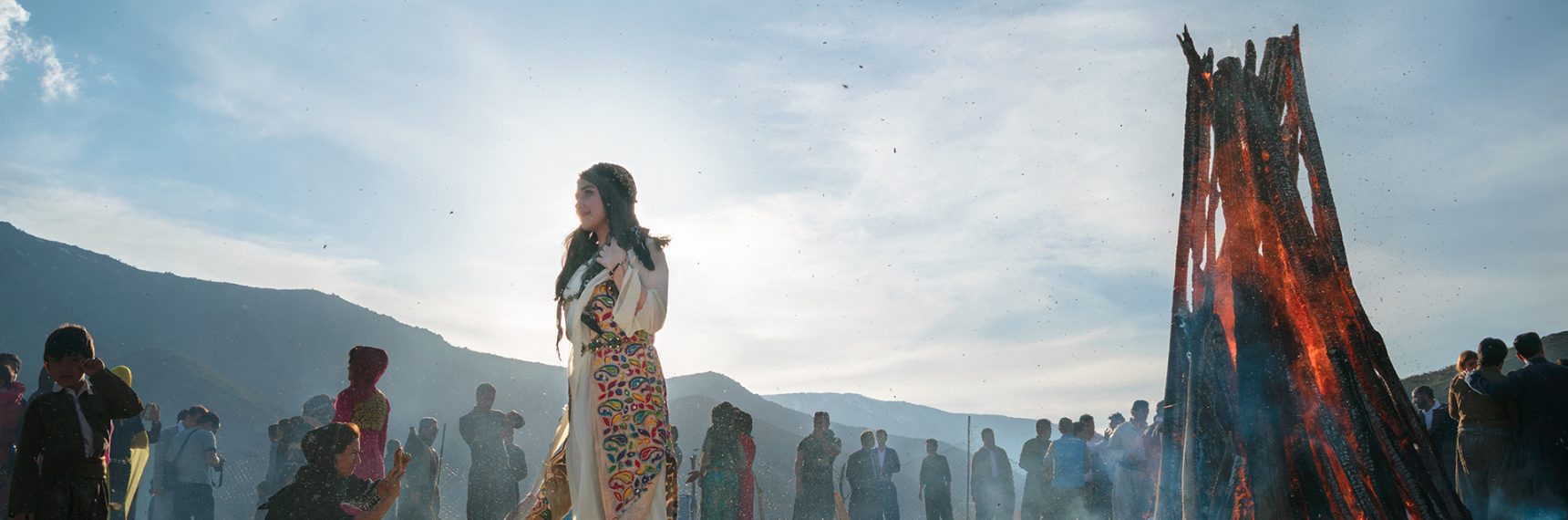
(Photo: Salar Arkan – سالار ارکان, CC BY-SA 4.0, via Wikimedia Commons)
Topics & Regions
About the Author
Topics & Regions
Explore More
For Syrian Kurds, Mother-Tongue Education is a Red Line

Related Research
The Coalition of Political Forces of Iranian Kurdistan: Risks and Opportunities
YPJ Integration: What are the Obstacles?

The SDF-Damascus Deal and the Kurdish Question: Prospects for Peace