
Multilingual Education Will Help Syria Succeed

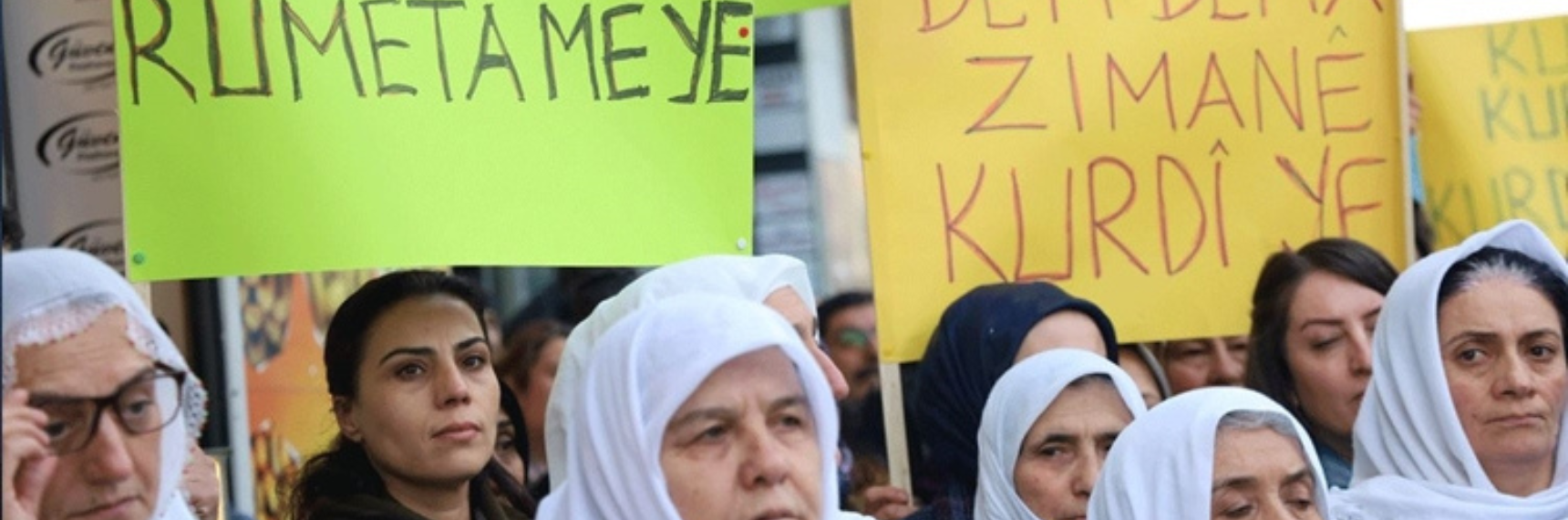
Under the Kurdish-led Autonomous Administration, a generation of Syrian Kurdish students received primary, secondary, and post-secondary education in their own language for the first time in Syrian history. The Syrian Transitional Government’s Decree No. 13 threatens to take that achievement away.
While it may be an objective improvement on conditions for the Kurdish language before 2011, the decree revokes linguistic rights Syrian Kurds have enjoyed for a decade and a half. This rollback is most obvious in the field of education. Decree No. 13 fails to recognize Kurdish as a language that can be used for teaching in schools. Kurds are offered just two hours of optional Kurdish courses per week in certain geographic regions.
The January 30th, 2026 integration agreement accepted by Damascus and the Kurdish leadership offers room for improvement on the education file. Article 11 recognized the diplomas granted by the Autonomous Administration’s multilingual education system. Article 13 committed the two parties to “working with the Ministry of Education to discuss the educational pathway of the Kurdish community and to take educational particularities into account.”
But as implementation discussions begin, Kurdish sources warn that the transitional government appears unwilling to budge on its offer of elective courses only. For Syrian Kurdish political actors, and virtually all Syrian Kurdish civilians, this is a non-starter. The use of Kurdish as a language of education is a minimum demand among political parties and communities, crossing internal political divisions and long predating the civil war.
Two Frameworks
From 2014 until 2026, northeast Syria’s Social Contract recognized Kurdish, Arabic and Aramaic as official languages. It further guaranteed that “all languages in the geography of North and East Syria are equal in all areas of social, educational, and cultural life [and] every people or cultural group has the right to organize its life and conduct its affairs in its mother tongue.”
Under the Autonomous Administration, Kurdish is the primary language of instruction — that is, the language in which lessons are taught — for Kurdish students through high school. They also learn Arabic and, often, a European language like English. At the university level, the language of instruction may be Kurdish, English, or Arabic, according to the subject matter.
Syria’s transitional constitutional declaration grants official status to Arabic only. Decree No. 13 recognizes Kurdish as a ‘national language’ without defining that term. It also reduces Kurdish from a language of instruction to an elective course. One Syrian official tasked with curriculum development said that the Kurdish curriculum is being developed in accordance with foreign-language teaching standards – an approach ignoring the fact that Arabic, not Kurdish, is the second language for Kurdish students. This means that children who speak Kurdish at home must learn a second language to be able to study subjects like math, science or history and will only be able to access their own language as foreign-language learners.
Why Multilingual Education Is Best for Syria
The Kurdish demand for mother-tongue education and the multilingual school system Kurds have created are not just backed up by decades of political struggle. This framework is supported by a significant body of academic research and international best practices. The transitional government’s position, in contrast, may exacerbate conflict and leave economic and political opportunity on the table.
Students who cannot study in a language they understand face serious educational disadvantages. When they fall behind in school, they are likely to fall behind in other areas of social, economic, and political life. Poor students from ethnic minority backgrounds – a condition that would describe many Kurds in the historically under-developed regions of Kobane and Jazira – are found to be left worst off by linguistic inequality in education.
These disparities are corrected when students learn in their own language first and add other languages later. UNESCO finds that “mother tongue based bilingual (or multilingual) education approaches, in which a child’s mother tongue is taught alongside the introduction of a second language, can improve performance in the second language as well as in other subjects.” In Guatemala, for example, Indigenous students who attended bilingual schools score higher across all subjects – including Spanish, the majority language of the country. This challenges supporters of the transitional government who claim that enshrining Kurdish as a language of education would harm Arabic mastery among Kurds.
Multilingual education also has benefits beyond the classroom in two areas where the Kurds and Damascus need success: economic development and peace and stability. On the economic front, multilingual education “increases access to higher education and vocational training,” “facilitates social and economic mobility by improving job access and increasing economic participation” and “has the potential to stimulate growth in national and international language industries, according to UNESCO. While “the imposition of a single dominant language as the language of instruction in schools…has been a frequent source of grievance linked to wider issues of social and cultural inequality,” multilingual education “can help reduce social inequalities” and therefore lessen prospects for conflict.
Policy Recommendations
The provisions related to education in the January 30th agreement should be implemented in a manner that supports educational success, prosperity, and peace through multilingualism.
Syria should recognize Kurdish as a language that can be used for education in law, the transitional constitution, and, ultimately, the permanent constitution. Immediate legal grounds for the use of Kurdish as a language of instruction could be prepared through a follow-up to Decree 13. Such a new decree could define ‘national language’ as a language that can be used as the language of instruction in schools just as the official language would be. The Constitutional Declaration should be amended to recognize Kurdish as a language with equal official status to Arabic that can be used as a language of instruction in schools and to recognize a right to mother-tongue education for all Syrians, perhaps in terms similar to those of Article 4 of the Iraqi Constitution. The permanent constitution of Syria should contain the same provisions.
Autonomous Administration schools and educational authorities should be integrated into the Ministry of Education in a way that preserves their existing capacity to offer education in multiple languages. Article 9 of the January 30th agreement states that the government will take over all existing DAANES institutions and that all employees will remain in their posts. This creates an opportunity to keep teachers and administrators who have experience teaching in Kurdish in their positions. As a result, the Ministry of Education would not need to hire or train new personnel to offer multilingual education, eliminating logistical and financial roadblocks.
The two DAANES-affiliated universities that offer Kurdish-language instruction, Kobane University and Rojava University, should be accredited. The recognition of diplomas under Article 11 has granted these institutions some legitimacy. The DAANES could work with the Syrian Ministry of Education and with universities in the Kurdistan Region of Iraq – accredited institutions that have experience teaching in Kurdish – to address any discrepancies or shortcomings and find pathways to accreditation.
The Kurdish Language Institute (SZK) should be formally registered in Syria and should receive support from the Ministry of Education, international organizations, and governments to continue its work on language standardization and the creation of academic materials. The Syrian government failed to consult any respected, representative sample of Kurdish experts in its work on Kurdish educational materials. Some ethnic Kurdish figures promoted by the government speak extremely poor Kurdish or do not know the language at all, suggesting that authorities may not be able to judge the quality of Kurdish-language experts. The SZK has already spent years working on the standardization of Kurmanci Kurdish and has published a reference grammar that is used by all Autonomous Administration institutions. The institution should be officially recognized under Article 12 of the January 30th agreement, which covers “licensing of all local and cultural organizations and media institutions in accordance with the laws governing the relevant ministries,” and taken as a reference for all parties engaged on language issues.
Guarantor powers should defend the Kurdish position on this issue and provide technical assistance for the codification and implementation of a multilingual education system. The United States has repeatedly emphasized its interest in a prosperous, unified Syria. As this paper describes, a multi-lingual education system in Syria’s Kurdish areas is likely to advance both goals. The U.S. could pressure Damascus to accept Kurdish demands on this matter and offer technical assistance to both parties for the implementation of the requisite legal and institutional changes.
(Photo: DEM Party)
Topics & Regions
About the Author
Explore More
For Syrian Kurds, Mother-Tongue Education is a Red Line

Related Research
My city defended the world from ISIS. Why is it still under siege?
The SDF-Damascus Deal and the Kurdish Question: Prospects for Peace