
YPJ Integration: What are the Obstacles?

The Kurdish-led Syrian Democratic Forces and the Syrian Transitional Government (STG) have been working to implement an integration deal for nearly one month. Military integration is proving to be one of the most difficult files to resolve. Complicating this critical issue further is the gap between the two sides on one key principle: women’s right to participate equally in public life.
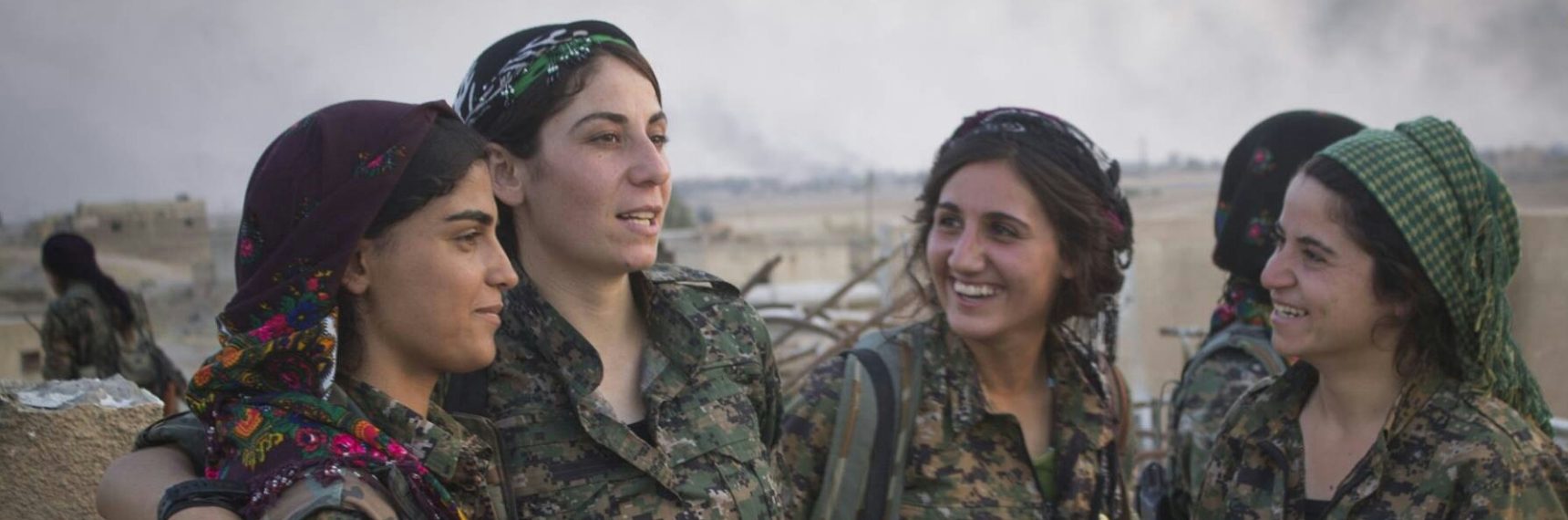
The SDF allowed women to serve in all military roles, including front-line combat, since its establishment. One of its founding components was the Women’s Defense Units (YPJ), an all-female armed force that operated with its own autonomous command structure.
The STG is led by former members of Hayat Tahrir al-Sham (HTS), a radical Islamist group. Women did not serve in HTS’ armed forces. The group imposed strict limitations on women’s rights and personal freedoms when it governed Idlib province prior to December 2024.
Syrian Kurdish leaders want female YPJ fighters to be allowed to integrate into the four new brigades that will be created for former members of the SDF under the terms of the January 30th, 2026 integration deal. So far, the STG has rejected this demand.
YPJ integration is a high priority for Kurdish negotiators and the communities they represent alike. Allowing Kurdish women to integrate into the armed forces would promote equal citizenship and be a step towards a military that represents all segments of Syrian society. It would also allow Damascus to benefit from the international partnerships and experience that the YPJ have gathered over years of collaboration with the U.S.-led Global Coalition.
The YPJ Case
The first battalion of the YPJ was founded in 2013 in Afrin, northwestern Syria. Today, it has approximately 2,000 to 2,500 members.
The group professes a commitment to women’s freedom alongside Kurdish rights. Many of its members were motivated to join to escape patriarchal social norms at home and resist crimes against women committed by state and non-state actors targeting Syrian Kurds. Under the principle of women’s autonomy implemented across military and civilian structures in northeast Syria, the entire command structure of the YPJ was female. While mixed units existed on the battlefield and both female and male commanders led operations, all internal decisions about women were made by women.
YPJ fighters participated in every major battle against ISIS in northeast Syria. Their units cooperated with and received training from the U.S.-led Global Coalition to Defeat ISIS.
To facilitate integration, the YPJ has conceded its autonomous command structure. It is willing to integrate within the scope of the new Syrian army division and brigades that will be created under the terms of the Jan. 30th agreement.
Legal and Institutional Frameworks
Syrian law does not explicitly prohibit women from joining the armed forces. Prior to 2024, some women served in the army in Syria, though it was culturally discouraged and their roles were usually tokenistic.
Since taking power, the STG has not passed any new laws that would prevent women’s participation in the military. Article 10 of its Constitutional Declaration says that “Citizens are equal before the law in rights and duties, without discrimination based on race, religion, gender or lineage.” This could, in theory, be a basis for non-discrimination and an equal right to participation in state institutions, including the armed forces.
Syrian Kurds believe opposition to YPJ integration is largely related to ideology and institutional inertia. Leaders in the STG come from a fundamentalist political tradition in which women do not participate in politics or security. The STG’s policies on women’s rights are far more moderate than those of HTS in Idlib and a handful of women have gained political positions in Damascus. However, there is a long way to go before full equality is reached — particularly in fields like security and defense.
As the Institute for the Study of War explains, the STG is “constructing a new Syrian military from the plethora of armed Islamist and other opposition groups with which Shara allied to topple the Assad regime. The new army consists primarily of factions that joined HTS as part of the Fateh al Mubin Operations Room that toppled Assad on the one hand and of Turkish-backed factions that were part of the Syrian National Army (SNA) and Fajr al Hurriya Operations Room on the other.” None of these armed groups allowed women to join. Some are led by men who are under international sanctions for a laundry list of abuses, including sexual and gender-based violence. A military composed of such groups is unlikely, to put it mildly, to be institutionally accustomed to working with women.
The size of the brigades to be created for former members of the SDF is another disputed matter in negotiations that makes the integration of women more difficult. Typical Syrian army brigades have between 3,000 and 5,000 fighters. The government has reportedly demanded that the new brigades be even smaller than this, limiting the total number of personnel that the SDF may integrate. It has also reportedly rejected the integration of the YPJ as its own brigade.
Military vs. Internal Security: Why the Difference?
In November 2025, Syria announced that its internal security forces and police forces, housed under the Ministry of Interior (MOI) would be open to women. It has also allowed female members of the SDF-affiliated Internal Security Forces (ISF) to integrate on the same terms as their male counterparts. Understanding the reasons for this divergence can help shape frameworks for YPJ integration into the armed forces.
The nature of the work that the two institutions do is unlikely to be the deciding factor. The Syrian MOI carries out operations that would traditionally be the purview of the army, such as counter-ISIS missions. ISF counter-terrorism units, which include both men and women and which do similar work to SDF counter-terrorism units, were seen providing security for the SDF-nominated Governor of Hasakah, suggesting that they are included under the terms of the internal security integration deal.
The MOI is a more ‘moderate’ institution than the military. The new Syrian army has become the home for the more extreme elements of transitional president Ahmed al-Sharaa’s coalition – including foreign jihadists and U.S.-sanctioned warlords. Some of these groups and individuals are so hostile to ethnic minorities and women as to make the YPJ’s participation in the same military structure potentially unsafe.
The international community is more engaged with the MOI than with the army. All joint Syrian-US counter-ISIS missions have been done through the MOI. Syria’s leaders may thus prioritize international priorities, like pluralism, more in the internal security forces than in the army.
Some integration proposals have suggested that the YPJ join the MOI, which would allow it to both continue the counter-terrorism work its forces have expertise in and respond to peacetime women’s rights concerns in a way that the army cannot. While this could be a short-term compromise, Kurdish women who wish to integrate into the government’s internal security and police forces are already able to do so. Women’s participation in the armed forces specifically is important for the women of the YPJ themselves and for a variety of security and political stability concerns.
Regional Norms
Many Arab countries allow women to serve in the armed forces and are taking action to promote even greater women’s participation. These examples do not map 1:1 onto SDF-Damascus integration: the YPJ are fully-formed, combat-tested women’s units that are simply asking to be allowed to continue their work as part of the national army of their country. However, regional states can show Syrian leaders that culture and religion are not an obstacle to integrating women into the military. This could challenge ideological opposition.
Neighboring Jordan, Lebanon and Iraq all allow women to serve in the armed forces. Jordan allowed female university graduates to be recruited as officers for civilian roles in 1973 and opened field roles to women in 2006. In 2022, the Jordanian Armed Forces employed “18,038 women, constituting 17.4 percent of its personnel,” though the vast majority were in medical or administrative roles. They have set a target of 3% women’s participation in combat roles. Lebanon allowed women to join the military in non-combat roles in the 1990s. As of 2019, the country was working to open combat roles to women. In that year, about 4,000 women served in the Lebanese Armed Forces, with some “deployed in critical mission areas.”
Women’s participation in the armed forces is also on the rise in the Gulf states. The United Arab Emirates has allowed women to join the armed forces since 1990. It hosts the region’s first military academy for women, the Khawla bint Al Azwar Military School, which now trains women from other Arab countries. An Emirati female fighter pilot, Mariam al-Mansouri, flew combat missions against ISIS over Syria in September 2014. Even Saudi Arabia opened its armed forces to women in 2021 — just three years after Saudi women were granted the right to drive a car.
The Arab League, of which Syria is a member, has an Executive Action Plan on Women, Peace and Security. This Executive Action Plan recommends that member states ‘review laws regulating military institutions and police forces and the extent to which they allow women to be affiliated with these institutions’ and ‘promote women’s participation in armed forces, police forces, and UN peacekeeping forces.’
(Photo: YPJ Fighters 2 by Kurdishstruggle, CC BY 2.0)
Topics & Regions
About the Author
Explore More
The Coalition of Political Forces of Iranian Kurdistan: Risks and Opportunities

Related Research
The SDF-Damascus Deal and the Kurdish Question: Prospects for Peace
Iran’s Kurdish Parties Work Towards Unity as Protests Escalate