
The SDF Can Solve Syria’s Counter-ISIS Problem

On December 13, a joint U.S.-Syrian patrol came under attack near the central Syrian city of Palmyra. Two U.S. service members and a civilian interpreter were killed. Once again, the lack of a functional state or cohesive armed force under the Syrian transitional government has led to destabilizing violence.
The United States first described the incident as an ISIS attack. U.S. President Donald Trump said that Syrian president Ahmed al-Sharaa was “extremely angry” with the incident and that it occurred in a region that he did not control. A Syrian Interior Ministry spokesman confirmed that the attacker had been a member of the internal security forces who was under investigation for extremist views and due to be dismissed the next day — raising questions as to why he was allowed within proximity of U.S. troops in the first place.
The incident laid bare the same quandary of intentions and incompetence that has come up around outbreaks of sectarian violence targeting Alawite and Druze communities and violations of the ceasefire with the Kurdish-led Syrian Democratic Forces (SDF). Is the Syrian government directing or knowingly allowing its forces to create chaos that actively undermines its publicly defined commitments and interests? Or is it simply unable to prevent violence and chaos, whoever the instigator may be?
The answer, once again, is a deadly ‘both/and.’ The transitional government, for a combination of pragmatic and ideological reasons, relied on all kinds of bad actors to form a nation-wide army after it took Damascus– from local and international jihadists to Turkey-backed Syrian National Army (SNA) militias under international human rights sanctions. Sharaa does not have full control over those forces or all the territory on which they operate in the way that a modern state is expected to. In some ways, Damascus benefits from this uncertainty: it can use foreign jihadists and the remnants of the SNA to threaten Kurds while claiming to uphold the ceasefire, for example.
But tolerance of criminals and extremists coupled with little capacity to restrain them can easily backfire. In this case, an ungoverned space, a security apparatus that selects for ethnic and religious homogeneity and alignment with Islamist ideology over competence, and limited capacity for vetting created perfect conditions for an ISIS strike that harmed Syrian forces and damaged their partnership with the international community.
If Syria and the United States want to ensure that this does not happen again, they must learn three critical lessons.
Now is not the time to alter the counter-ISIS mission.
Ahmed al-Sharaa took a real risk by bringing Syria into the U.S.-led Global Coalition to Defeat ISIS. His choice was still the right one for Syria and the international community. This attack shows that Syria has a long way to go before it can fully put that commitment into practice.
While the U.S. works with the Syrian government to help it reach that level, it must maintain its counter-ISIS partnership with the SDF. Now is not the time to shift the U.S. presence away from northeast Syria as a pressure tactic in negotiations to integrate the SDF with the Syrian state, contrary to the arguments of some analysts. The SDF is not the actor holding up Syria’s reunification. A better way to facilitate the implementation of the March 10th SDF-Damascus integration deal would be to pressure Turkey to drop opposition to reforms that it might not accept for its own Kurdish population but that would be realistic for Syria, like constitutional rights for Kurds and local control of security.
Syria must deal with bad actors in its security forces – starting at the top.
Damascus has made the right move by publicly recommitting to the fight against ISIS and arresting members of its security forces suspected to be connected to the terrorist group. But this does not go far enough. Institutional culture starts at the top. As long as the Syrian military refuses to recruit minorities and is led by men under international sanctions for incorporating ISIS members into their ranks, trafficking women, and terrorizing ethnic and religious communities, the will and capacity to catch every rank-and-file extremist and disturbed individual cannot exist. The international community should offer to help Damascus clean up its armed forces. This, too, can facilitate the implementation of the March 10th agreement by disempowering individuals and groups that many Syrian Kurds see as an existential threat.
The SDF integration process must preserve elite Kurdish units and DAANES local governance structures.
The March 10th agreement is the best foundation for counter-ISIS progress and nation-wide stability that Syria has. If integration is not rushed and is pursued in the right way, it can solve many of the problems that Damascus and Washington are dealing with now.
First, the demographics, ideology and structure of the SDF’s Kurdish core make it impervious to ISIS infiltration. Its leaders are known to and trusted by the international community after 10 years of collaboration. The only actor that takes issue with them is Turkey – and the Kurdistan Workers’ Party (PKK) ceasefire and commitment to transformation into a political actor means that Turkish ‘security concerns’ no longer hold water. In fact, a resurgent ISIS would threaten Turkey much more than an empowered Kurdish presence in the Syrian army ever could.
If these Kurdish units can join the new army in blocs and their leaders can take on meaningful positions in the Ministry of Defense, Damascus will gain increased capacity to fight ISIS and other threats. It will also lose any excuse for relying on more problematic individuals and entities. The Coalition will preserve its existing counter-ISIS partnerships and gain the ability to leverage them across all of Syria.
Second, it is apparent that the task of governing all the territory it currently claims has stretched Damascus thin. Sending personnel and resources to the northeast to enforce a centralized state on peaceful, secure Kurdish areas is a foolish use of limited capacity and would undo any security benefits that reunification might bring.
Bringing the institutions that successfully provide security in the northeast today into state stuctures largely intact will ensure that Syria can concentrate on securing existing ungoverned problem areas without creating new ones. This will require, at the very least, legal and constitutional commitments to strong local and provincial government across all of Syria.
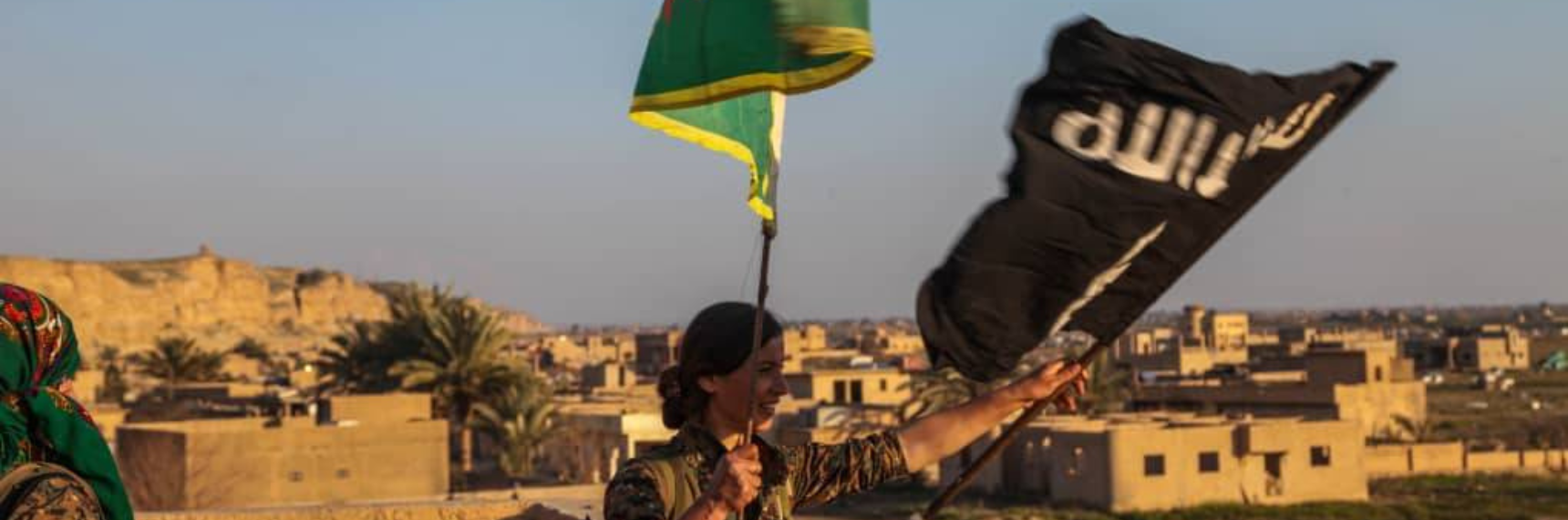
Photo: Nazim Dastan / Mezopotamya Agency
Topics & Regions
About the Author
Topics & Regions
Explore More
The Coalition of Political Forces of Iranian Kurdistan: Risks and Opportunities

Related Research
YPJ Integration: What are the Obstacles?
The SDF-Damascus Deal and the Kurdish Question: Prospects for Peace
Iran’s Kurdish Parties Work Towards Unity as Protests Escalate